 KnowThis
Key Takeaways
Key Takeaways
- 1A debit card spends money already sitting in a linked checking account; a credit card spends the issuer's money as a short-term loan, billed later — that single difference drives most of the other distinctions between them.
- 2Because a credit card is a loan, using it and repaying it on time is what builds credit history — a debit card, drawing on money you already own, generally has no effect on credit scores at all.
- 3Fraud liability differs by law: credit card fraud liability is capped at $50 by federal law, while debit card liability depends on how quickly the loss is reported, and can be higher if reporting is delayed.
The concept
Once the distinction is framed as "whose money moves first," the different rules around credit-building and fraud liability stop looking arbitrary and start looking like direct consequences of that one structural difference.
A cardholder's debit card number is stolen and used for $800 in fraudulent charges. They report it to the bank four days after discovering the charges on their statement. Under Regulation E, what happens to their maximum liability compared to reporting within two business days?
Worked examples
Example 1: The same $50 purchase on each card type (baseline case)
Example 2: Why a hotel hold behaves differently on each card (edge case / variation)
Example 3: Building credit history with responsible credit card use (real-world / applied case)
Why does using a debit card exclusively, and never a credit card, typically fail to build a credit history over time?
How it works (visual)
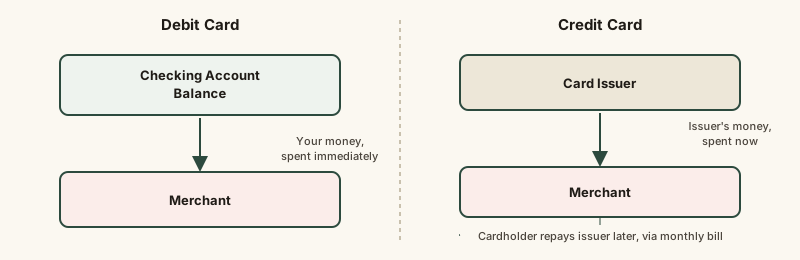
The debit side is a single direct line — your account to the merchant. The credit side has two separate steps: the issuer pays the merchant immediately, and the repayment from the cardholder happens afterward, on its own timeline — that second step is the loan.
Common mistakes
Common Mistakes
Assuming debit and credit cards carry the same fraud liability rules.
→ Remember credit card fraud liability is capped at $50 by federal law regardless of reporting speed, while debit card liability under Regulation E scales with how quickly you report the loss — report debit card fraud immediately.
Using only a debit card while expecting it to build a credit score over time.
→ If building credit history matters, use a credit account (even a small one) and repay it — debit activity generally isn't reported to credit bureaus at all.
Not accounting for a merchant's temporary authorization hold on a debit card, and overdrawing the account before the hold releases.
→ Expect holds (common at hotels, gas stations, and rental car counters) to temporarily reduce your usable debit balance, sometimes for several days, and budget around that.
Common misconception
“A debit card is basically just a credit card that happens to be linked to a bank account.”
The two function on fundamentally different mechanisms: a debit card moves money you already have, while a credit card creates a short-term loan repaid later. This isn't a cosmetic difference — it drives different fraud-liability laws, different effects (or lack thereof) on credit history, and different consequences when a merchant places a temporary hold.
What to do next
What to do next
- Report a lost or stolen debit card immediately — under Regulation E, liability limits scale with how quickly it's reported, unlike the flat $50 credit card cap.
- If building credit history is a goal, look into whether a credit account (even a low-limit one) fits your situation, since debit activity alone generally isn't reported to credit bureaus.
- Before a hotel, rental car, or gas station transaction, consider using a credit card instead of debit if a temporary authorization hold could tie up cash you need available.
- Read your specific bank's and card issuer's fraud-liability policies directly, since some issuers offer protections beyond the federal minimum.